@rajagopalanar As a solo developer so far I've not considered full automation of my SDLC, but it may be something I consider in the future with tools like Revolte.
PH 用户
The hardest engineering question in building Revolte was this: how do you make Interactive Sessions and Autopilot feel like one product, not two things bolted together?
The answer is that they share a substrate. Both run on the same agent stack, the same governance layer, the same Platform-as-Code contracts. When you switch from driving a session step by step in Interactive to handing off a Jira ticket in Autopilot, you're not moving to a different system. It's the same agents, with a different amount of your attention on them.
That's what makes it a real adoption story for enterprises. You're not deploying two tools with two governance models. You're deploying one platform that meets your teams where they are, some hands-on, some hands-off, all inside the same boundaries.
Happy to go deep on the architecture if anyone's curious.
每个 AI 开发工具都逼你选边站。Cursor 是亲力亲为型:每一次击键你都参与其中。Devin 是放手型:你把任务交给它,然后检查结果。两者都不错,但光靠任何一个都不足以支撑一个真正的团队。因为不同的工作需要不同程度的监督。
支付服务里棘手的重构?你想要亲力亲为。一堆依赖升级的积压任务?那就放手交给它。真正的问题不是“我们要不要采用 AI?”而是“我们该怎样在不同风险等级的工作中采用 AI?”没人回答这个问题。
所以我们打造了 Revolte,让你在一个工作区里同时拥有这两种模式。
Autopilot 模式(来自我们上次发布)会接下一个 Jira ticket,端到端地跑完从 PR 到部署的整个流程,工程师在关键步骤上做审批。
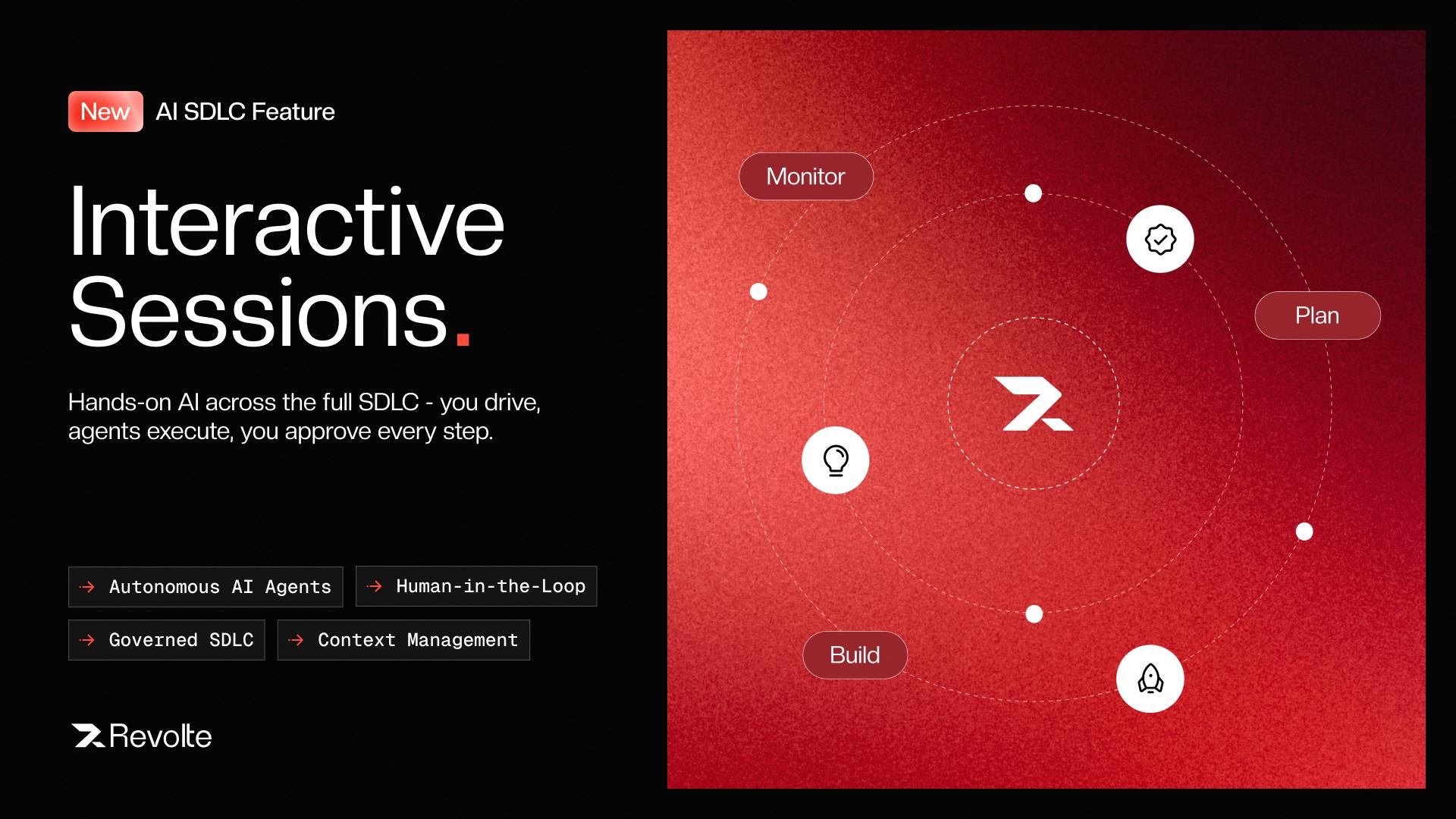
今天我们要推出 Interactive Sessions:一个带标签页的工作区,你可以直接和智能体一起驱动整个生命周期——架构、代码、测试、staging、部署。每个任务一个 session,每一步都由你审批。不需要 Jira。注册后不到一分钟就能开始。
两种模式共享同一套治理层:写代码前审批计划,merge 前看 inline diff,部署前设成本上限,每个操作都有审计追踪。
想掌控时亲力亲为,想追求吞吐量时放手交给 Autopilot。同一个平台,同一次采购沟通。
非常希望听到尖锐的反馈,尤其是来自正在想办法让不同风险偏好的团队采用 AI 的工程负责人。我们就是为了解决这个问题而做的。
终于能发布 Revolte,我们非常兴奋——一个平台同时支持交互式和自主式 AI 开发。🚀
我不断从工程负责人那里听到的是:
他们的高级工程师用 Cursor,团队其他人用 Copilot,同时还在试点用 Devin 做自主式工作。三套工具、三套治理模型、三次采购沟通、三个成本中心。
Revolte 的主张不是“我们比其中任何一个都强”,而是“你不需要三套工具”。Interactive Sessions 覆盖亲力亲为的工作,Autopilot 覆盖异步工作。两者共享同一治理层、同一审计追踪、同一预算系统、同一采购沟通。
早期客户看重的并不是某个具体功能,而是不用为交互式和自主式 AI 的采用分别制定推行计划。同一个平台,同一套规则,团队根据眼前的工作选择合适的模式。
很想知道你的看法——你们组织内部也是这样吗?👀
The answer is that they share a substrate. Both run on the same agent stack, the same governance layer, the same Platform-as-Code contracts. When you switch from driving a session step by step in Interactive to handing off a Jira ticket in Autopilot, you're not moving to a different system. It's the same agents, with a different amount of your attention on them.
That's what makes it a real adoption story for enterprises. You're not deploying two tools with two governance models. You're deploying one platform that meets your teams where they are, some hands-on, some hands-off, all inside the same boundaries.
Happy to go deep on the architecture if anyone's curious.